

Tips from the Top Dog Groomer for Aggressive Dog Owners:
From Fearful to Feeling at Ease
By Hippie Hounds Grooming • July 30, 2026
Anyone who has ever owned an aggressive dog knows how stressful trips to the groomer or veterinarian can become. Besides just worrying about your dog’s reaction, there is the added stress of concern for the safety and well-being of the people working on your pet. The truth is that these services are necessary to keep your pet in optimal health, but the emotions that come along with it might make you have second thoughts about scheduling those appointments. Finding the right dog groomer for aggressive dog needs makes all the difference, and by following these helpful tips, your trips to the groomer and vet can become better each visit!
If you’re stuck in the stress of handling your aggressive dog, don’t worry! We’ve compiled our best advice as dog groomers for aggressive dogs to help. Patience and gentle at-home desensitization, like slowly introducing grooming sounds and tools, go a long way. So does understanding your dog’s triggers and body language, using clear communication, and being a calm and confident handler.
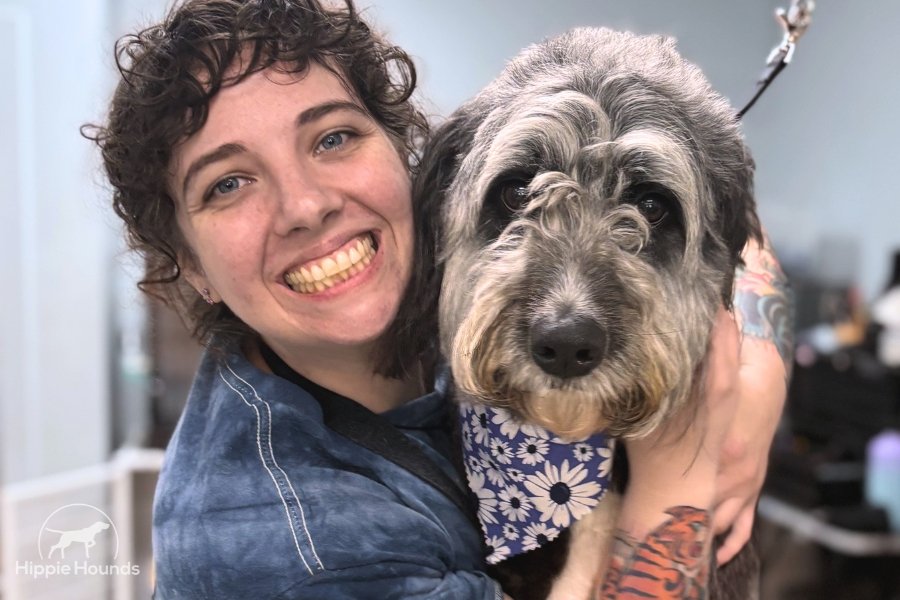
At Hippie Hounds, our team specializes in dog grooming for aggressive dogs, offering a warm, low-stress, and trusting environment where reactive pups feel safe. We work with your dog, never against him.
Why “Aggression” Is Often Really Fear
With proper tools and finding the right business to help you with your reactive pet, scheduling grooming appointments doesn’t have to feel so scary. Understanding that most aggression is actually rooted in fear can help bring you to a solution that comforts your dog.
Common Fear Triggers During Grooming
Reactivity to grooming can be triggered by a few different variables, but the most common is a fear of the tools we use. If things feel unfamiliar, they may seem threatening to a dog.

For instance, the sounds of clippers getting near their ears when they haven’t been desensitized to them, or the shiny metal of the shears approaching their eyes.
Out of fear, dogs typically nip at the tools instead of us. They want the seemingly scary instrument to stop and go away, so their only way to communicate is to either cower away or bite. Unfortunately, in untrained dogs who aren’t used to it, grooming can trigger their fight-or-flight response, which most often causes aggression.
How Fear Looks vs. True Aggression in Dogs
Fear reactivity displays in aggressive behavior, but when does the line cross into true aggression?
Dogs are highly intelligent and know what they are doing when they bite, which includes truly aggressive dogs. They will often bite at our hands, arms, or bodies instead of going for the tools. In the most dangerous of cases, they will even bite at our face and throat. Those are kill-shots.

It is important to pay attention to what the dog is biting at when they are displaying aggression because it clues groomers into how to proceed.
Dogs who are fear-reactive will typically respond well to a loving voice of reassurance between scary moments, showing that all they need is a little encouragement to get the job done. With truly aggressive dogs that are trying to bite us, typically a higher-pitched voice and attempts at affection increase their reactivity and aggression. Once a dog has lost trust, “baby-talking” and offering treats alone is often ineffective and exacerbates their anxiety.
Why Understanding the Root of Aggressive Dogs Matters
At the root of all fear is a lack of trust. Sometimes this is a lack of trust simply from not being groomed often enough and falling out of routine, or getting started too late in life as a puppy or young adult.
Every pet is a unique individual, just like us, so it is important to get an understanding of the dog’s background and how it has affected their current behavior to begin desensitizing them.
Dogs who are not trained can come with an attitude of wanting to be “top dog” in every situation, and this leads to a lack of trust in being led by a human. Sadly, it can also be a lack of trust due to past trauma. Unfortunately, not all groomers are patient with fearful or reactive dogs, and if there is an ingrained pattern of bad experiences or abuse, those are the hardest cases to turn around.
What to Look for in a Dog Groomer for Aggressive Dogs
So how do you find a professional you can trust to build a relationship with your dog? Things to consider in your choice are:
- How much experience the groomer has with reactive and fearful dogs.
- How well the groomer demonstrates confident, fear-free handling.
- What methods are used to minimize anxiety (from the dog and the groomer).
Experience with Reactive and Fearful Dogs
The first step is finding a salon or groomer with a reputation and background in harder-to-handle cases. While the internet is a great resource to go to ask the community, you’ll find better luck asking other pet professionals who they recommend. Ask your trusted veterinarian, trainer, or pet store who they have heard about and begin your research there.
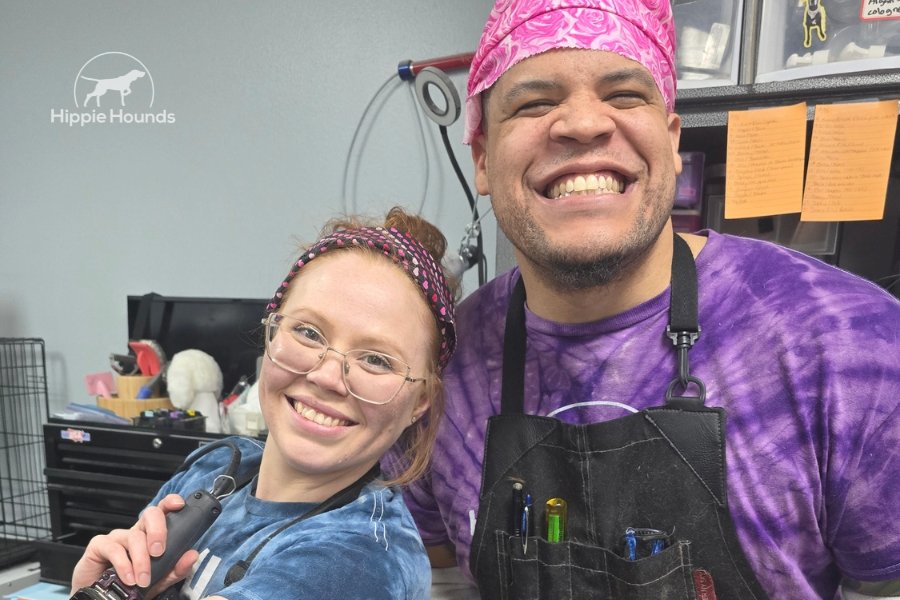
Experience matters! At Hippie Hounds, our team of groomers consists of ONLY seasoned professionals at both grooming and confident dog-handling.
You’ll want to find a salon or groomer with senior groomers who are experts in the field. Newer groomers have a tendency to approach aggressive behavior with fear, not having the experience in how to handle all behavior yet. Dogs realize this, causing a further lack of trust leading to potentially dangerous situations and reinforcing your dog’s hesitancy to get groomed.
Low-Stress and Fear-Free Handling Methods
Although some dogs benefit from Fear-Free Handling methods, aggressive dogs are oftentimes not “consenting” to be groomed. This leads to a challenge of wanting to be fair to the dog’s emotional state, but also needing to get these services done to avoid physical health issues.
The best way to handle an aggressive or fearful dog is to be confident and fear-free as the handler. Over time, as a groomer, you learn how to work with the dog instead of against them, meaning the idea changes from “controlling the dog” to “keeping them under control”. There is a huge difference because forcing a reactive dog to behave in a certain way builds up more anxiety. Instead, as groomers, we have to go with the flow and move with the dog.
Clear Communication and Safety Protocols
Utilizing muzzles and bite gloves are excellent ways to remove fear from the human and calm the pet down. In many cases, once a dog knows they cannot bite, they oftentimes stop trying to and relax. Bite gloves make it safer for the worker and add a sense of bravery that the dog can lean into. If we aren’t afraid of gently holding them, even when they are attempting to bite us, then they feel our love and can trust that we have the best intentions for them.
See why we opt to use methods like the soft muzzle to help dogs relax, especially those who are more sensitive to the grooming process.
Not raising your voice while staying calm and non-reactive is crucial to building your relationship with the dog. If they cannot trust you to stay calm, their reactivity will increase. And especially in cases of fear reactivity, you never want the dog to look at you as a perceived threat.
At our salon, we always use a second person to assist our groomers, instead of relying on anxiety-inducing and potentially harmful extra restraints. Dogs can feel held and encouraged rather than strapped down and immobilized, leading to trusting the process that our aim is not to hurt them.
Learn more about grooming restraints and the safety measures your dog will always receive at Hippie Hounds.
Questions to Ask Before You Book
There are important questions to ask before booking a grooming service for your aggressive dog.
We recommend asking:
- What are your policies on dogs who bite?
- Is there a better time or day to schedule an appointment?
- How long have the groomers been grooming?
Desensitization Tips for Training Aggressive Dogs
So what can be done at home to help improve the situation? How can you, as a dog owner, effectively reinforce positive behavior that aids in desensitization towards grooming? Our advice is to: take baby steps introducing tools, praise purposefully, consistently build on your training, and understand how working with a professional can help.
Start Small at Home
Slowly and calmly introducing tools that mimic certain grooming noises or sensations can help your dog build comfort and familiarity with steps of the grooming process over time.

For example, an effective and non-threatening tool to start with is a vibrating toothbrush. The kids’ versions are great and inexpensive.
Turn the toothbrush on, get it near your dog (even if it’s just in the same room to start), give one “Yes! Good job!” if your dog remains calm, and turn it off. Be nonreactive and do not overly correct nor babytalk your dog. Never force instruments on your pet, either.
Once your dog is comfortable being near the toothbrush while it’s on, you can begin attempting with larger tools. A pair of clippers at home works great, but do not attempt to actually use them on your pet. If your dog gets stressed or walks away, leave them alone and try again the next day. The goal is to desensitize your pet to the sound, not necessarily to make contact with the tool on them.
Build Positive Associations
Once your dog stops reacting to the noise and doesn’t run away from the tool, it is time to start with more positive rewards.
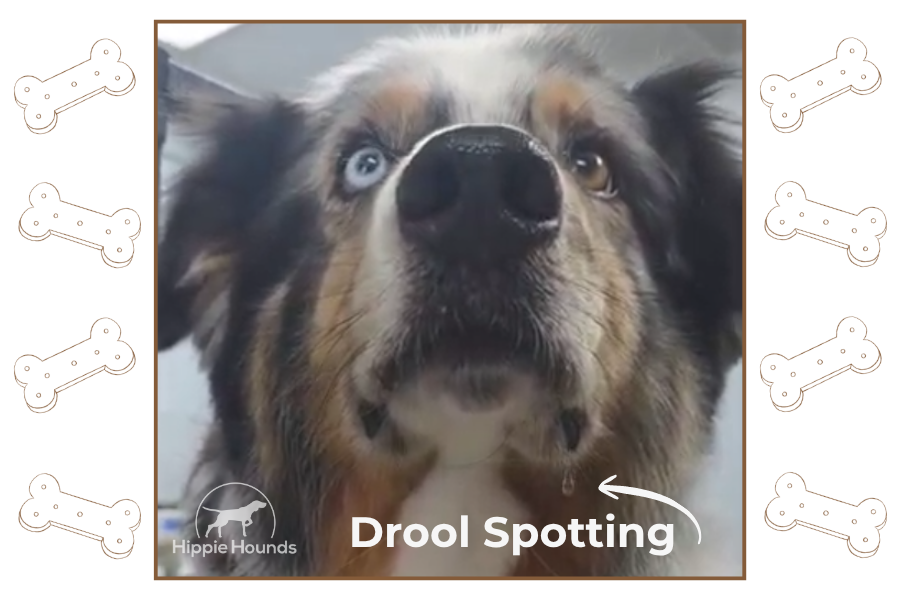
It is important to know what motivates your dog – some are food motivated, some are toy motivated, and some are simply praise motivated. When your dog remains calm and is able to be confident near tools, begin treating them or giving them their favorite toy to build the association of a vibrating tool with something positive.
It is important to remember not to force praise on your dog. If they get to the point where they are displaying reactive body language such as cowering away, turning their head from you, or licking their lips, back off from the session and leave them alone. You want to build trust with them, not enforce negative behavior by praising when they react.
Practice Short, Consistent Sessions
The most effective way to train your dog is through short, consistent sessions. It doesn’t have to be long for it to help. Short sessions that become routine are more productive than spending too much time at once. Even working for only five minutes a day on desensitizing builds up in the long run and leads to more success in the grooming salon.
Know When to Bring in a Professional
It’s best to recruit help from a professional once a pet’s fear or reactivity turns to biting. Even the most sweet-natured of dogs can attack when pressed to the point of feeling stress they cannot escape. Being safe for you and the members of your family and not exacerbating anxiety in your dog are more important than making grooming attempts at home.
How Hippie Hounds Is the Helpful Dog Groomer for Aggressive Dog Owners
Reactivity in dogs is something we see every day and have garnered a reputation for being able to handle. Our combined decades of experience have us confident in handling the most delicate of cases, and one of our favorite parts about the job is witnessing dogs be rehabilitated after being in our care.
A Supportive, Welcoming Grooming Environment
Our team is full of loving and caring humans who have decided to dedicate their life’s paths to helping our furry best friends.
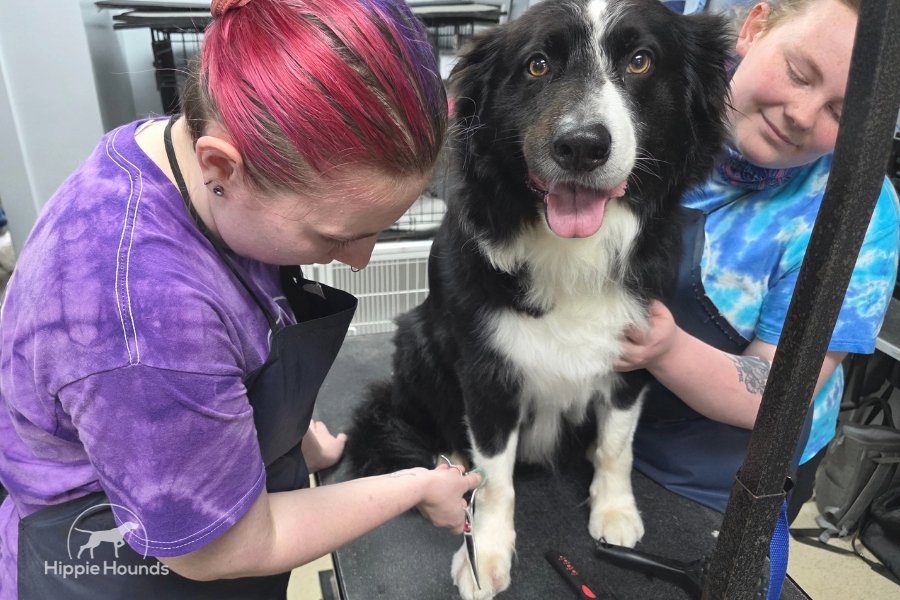
Dogs can feel the warmth that comes from each of us as we support them through the grooming process. We truly care, and fostering a relationship of trust is an important core value of our company.
Trained Dog Grooming Staff Who Work with All Temperaments
Everybody on our team is trained hands-on with our expert owners. When a challenging behavior occurs, we see it as a training opportunity for our staff and coach through proper techniques. Our onboarding for new staff allows for gentle entry into dog handling, making sure that more extreme cases are taken care of by longer-employed staff.
Building Trust Visit After Visit
Getting your dog in a strict grooming routine is crucial to eliminating aggression. Throughout the visit, we reassure your dog that they are okay. We are confident when handling them and, when appropriate, full of love and praise. There are many moments we have with dogs while they are on the table when we connect with them, and these moments over time lead to less of a reactionary state.
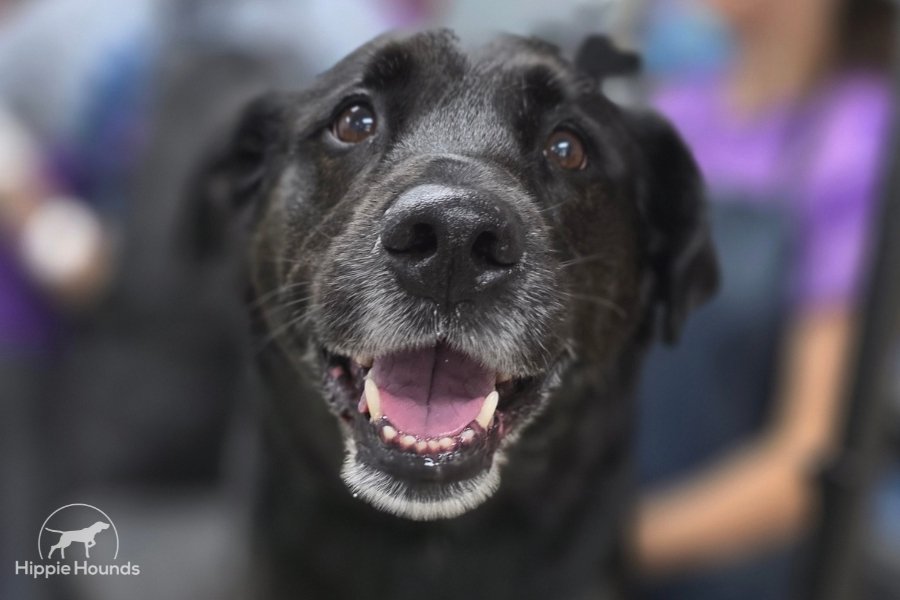
Time and time again, we see dogs that start off scared to come in the front door but eventually run into the lobby, happily dragging their parents to come in!
We see your dog for who they truly are inside, and many of them know they can trust our expert handling and ability to read their body language. It’s so important to work with them, never against them.
Frequently Asked Questions on Dog Grooming for Aggressive Dogs
We get a lot of questions about grooming reactive or aggressive dogs. Most often, we hear:
Start by asking other trusted pet professionals such as your veterinarian or local pet store. Research the company’s website, ask about their core values, and read through the history of online feedback. Take all negative feedback with a grain of salt; however, do not discount it if patterns occur.
Yes, absolutely! Our salon prefers to use multiple humans and to work on the same pet to keep everyone safe. We also make use of muzzles, cones (like from the vet), and will even request specific muzzles as a prerequisite to getting groomed.
Something to remember is “humanity over vanity.” If a dog is biting at the tools, do not expect a groomer to be able to keep the groom in a specific style. Let the groomer pick the haircut and remove expectations for perfection. Your dog needs grooming for optimal health, and safely getting the service done is what’s most important.
Yes, it is common practice that grooming salons will charge higher rates or handling fees based on the pet’s behavior. At our salon, this allows us to employ more staff and pay livable wages so that our team is passionate about coming to work. Unfortunately, the reality is that owning dogs with special needs can come with added costs. If you find a groomer who is safe and treats your pet with respect, it is worth paying them for the skilled work they are able to do.
When done properly, training aggressive dogs will make grooming easier over time. Never induce more anxiety in your dog by forcing training on them, and avoid using corrective training in a grooming setting at all costs, as this severely increases aggression from fear. With patience and understanding, most dogs can ease into being groomed. Some may never fully stop biting, but if you find a groomer you can trust, leave that to us to handle.
The Tail End
A Better Grooming Experience for Aggressive Dogs Is Possible
What helps the most in aggression cases is a confident human leading the situation. Becoming fearful or emotional during tense moments contributes to a dog’s reactivity levels. Staying calm but lovingly resilient is the first step in rehabilitating aggressive dogs. If they cannot trust us to be nonreactive, how can they become nonreactive themselves?
If your dog has a history of issues with groomers or a bite history, don’t be afraid to contact us to see if we’d be a good fit to groom your dog. We have seen dogs of all shapes, sizes, and backgrounds, and we are always happy and willing to help lend a professional hand to improve your pet’s quality of life.